
Photos: Carrie Rosema, for UCR Magazine.

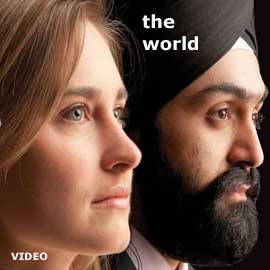

People
A Lifelong Mission:
Prof Pashaura Singh
An Interview with KONRAD NAGY
The following is an interview with Dr Pashaura Singh. He holds the Dr. Jasbir Singh Saini Chair in Sikh and Punjabi Language Studies at the University of California - Riverside.
Question by Konrad Nagy: Within Religious Studies, what is your specialty or area of focus?
Answer by Prof Pashaura Singh: My specialty is to understand the process of canon formation in the Sikh tradition. My teaching and research focus on scriptural studies and early Sikh history. I have a sound knowledge of traditional Sikh learning, manuscripts in archaic forms of Gurmukhi script and Indian religious traditions, with a mastery of contemporary issues in textual studies, canonicity, hermeneutics, literary theory, and history of religions.
Q How would you define Sikhism? Why is it important to study? Why is it important for universities like UCR to have specialized Religious Studies programs?
A As the youngest world religion, Sikhism originated in the northwestern region of Punjab on the subcontinent about five centuries ago. It stresses the notions of divine unity and human equality. It is oriented toward action, inspiring the dignity of regular labor, family life, neighborly hospitality and social responsibility.
Its adherents constitute about 2 percent of India’s one billion people. The global Sikh population is about 30 million, which is more than the worldwide total of the Jewish people. About four million Sikhs have settled in other parts of the world through successive waves of emigration in Southeast Asia, Australia, New Zealand, East Africa, the United Kingdom, and North America.
Although Sikhs have been in the United States for more than a century, it is painfully clear that many Americans simply do not know who Sikhs are.
On 15 September 2001, a Sikh-American became the first victim of the racial backlash that followed the 9/11 terrorist attacks. Balbir Singh Sodhi was shot dead in Phoenix, Arizona, by a self-described ‘patriot’ who mistook him for a Muslim.
More recently, on 5 August 2012, a gunman burst into the gurdwara (literally ‘God’s Door’, or Sikh place of worship) in Oak Creek, Wisconsin, USA, and opened fire, killing five men and one woman, ambushing one police officer, and injuring three others before dying of a self-inflicted shot to the head. The killer, identified as a white supremacist, shot the Sikhs because he ignorantly believed they were Muslim.
Such incidents clearly show how most Americans are uneducated about Sikh religion and culture. Thus there is an urgent need to make the study of the Sikh tradition an integral part of university-level instruction.
Within the last two decades scholars have begun to question the prevailing attitudes towards the study of Sikhism in both the west and India itself to the point that this least examined and perhaps most misunderstood of South Asia’s religious and cultural traditions now occupies seven academic chairs within the United States and one in Canada, with more proposed.
It should therefore elicit little surprise that undergraduate and graduate courses in Sikh Studies have been increasing dramatically over the last decade, a rise which corresponds in part to Sikh immigration into Canada, the United States, and the United Kingdom.
Q What fascinates you the most about Sikhism? What subjects and topics in Sikhism are you most interested in?
A I am fascinated most about the genesis, evolution and canonization of the foundational text of Sikhism, the Adi Granth ('The Original Book’), under the direct supervision of the fifth Guru, Arjan (1563-1606). The tenth Guru, Gobind Singh (1666-1708), closed the Sikh canon by adding a collection of the works of his predecessor, Guru Tegh Bahadur, to the original compilation of the Adi Granth.
Before he passed away in 1708, Guru Gobind Singh terminated the traditional line of personal Gurus, and proclaimed the Adi Granth as the eternal Guru for Sikhs. Henceforth, it was to be called Guru Granth Sahib, and is the only spiritual guide for the Sikhs.
This process reflected the top-down mode of canonization in the history of scriptural traditions. The place and function of the Adi Granth as Guru has inspired Sikhs throughout their history in personal piety, liturgy, ceremonies and communal solidarity. It has provided a framework for the shaping of the Sikh community and has been a decisive factor in shaping a distinctive Sikh identity.
I am equally interested in early Sikh history, particularly the life and works of Guru Nanak (1469-1539), the founder of the Sikh tradition. A great deal of work still needs to be done to reconstruct his biography by contextualizing his life within the historical framework in which he lived.
Q What has The Dr. Jasbir Singh Saini Endowed Chair in Sikh and Punjabi Studies allowed you to do? What have you been able to accomplish as a result of the appointment?
A The Dr. Jasbir Singh Saini Endowed Chair in Sikh & Punjabi Studies was established at University of California (“UC“) - Riverside through the vision and generosity of the Estate of Dr. Jasbir Singh Saini, The Sikh Foundation, and prominent members of the local Sikh community.
The said Chair was the second Sikh Studies Chair to be established within the University of California system for the purpose of building academic strength and visibility in matters pertaining to Sikh culture and religion. Proceeds from this gift have dramatically increased our capacity for teaching, scholarship, and outreach in Sikh Studies.
Since my appointment to the Saini Chair on 1 April 2008, I have organized three major international conferences at UC Riverside that proved resoundingly successful. These academic enterprises have not only promoted Sikh Studies but also enhanced the UC Riverside’s reputation as a center of excellence at international level.
In particular, these initiatives have contributed to expanding the University's teaching and research activities in South Asian traditions in the larger field of Religious studies.
Q What do you hope to do in the future? What are some of your goals as Endowed Chair?
A I have established working relationships with each of the eight Sikh Studies Chairs in North America. My major goal for the future is to extend this active cooperation by establishing relationships with the universities in Punjab and India. I am currently working on a strategic plan for Sikh Studies that will be the blueprint for our future activities in this area.
The main purpose of academic conferences is to strengthen the on-going process of community building between individual scholars as well as across institutions. Most ambitiously, these enterprises will raise further the profile of UCR, its faculty, and its students and lay the foundation for future scholarly collaborations among UCR and other institutions.
Q As both a Professor and an Endowed Chair in Religious Studies, what do you feel is your main goal or duty? That is, what motivates you to continue studying, researching and teaching?
A During the last eight years at UC Riverside, I have enthusiastically played a dual role of a professional academic and a public intellectual.
As an Endowed Chair I have helped UC Riverside to build relationships through outreach efforts to the Sikh academy, the local and national Sikh communities, and the community at-large.
As the Co-Chair of the Sikh Studies Group of the American Academy of Religion (AAR), I have been instrumental in giving voice to the field of Sikh Studies at this most prestigious academic forum in the world.
This leadership role, along with outreach activities including public lectures and participation in academic and community events, has broadened external relations with the UCR campus. It has also presented opportunities for collaboration, and increased the visibility and understanding of Sikhism and Sikh Studies.
Q How did you end up at UC Riverside? What about UCR appealed to you?
A I came to UCR from the University of Michigan, Ann Arbor, where I taught Sikh Studies, Punjabi language and Religions of India for thirteen years (1992-2005).
In addition to the warm weather of Southern California, I cannot forget the warmth with which my colleagues welcomed me to the Department of Religious Studies here. It has been a privilege to work with them for all these years, and I continue to enjoy their trust and confidence after becoming the Chair of the Department.
Q There was a bit of controversy surrounding your appointment to the Endowed Chair. How did you handle it? Do you still receive criticism? If so, how do you deal with it now?
A The kind of socio-religious controversy surrounding my work on the textual history of the Adi Granth is not something new. It is surprisingly a frequent phenomenon and happens most of the time in homogenous traditional societies.
Thus, it is structural / political and is similar to the experiences of scholars working in comparable contexts such as the battles fought in the 19th century in Jewish and Christian Studies, when the historicity of both the Jewish scriptures and the Christian Gospels were questioned.
The issues pertaining to South Asian modernization and diaspora provide the key to understand the true nature of such controversies.
In the West, Sikh Studies is a new field, and much of the reaction to scholars’ work reflects the Sikh community’s relative lack of experience with the analytic understanding of their tradition.
As that experience grows, Sikhs are likely to make adaptations and discoveries similar to those of their counterparts from other religious traditions -- often ignoring analytic works as not serious, sometimes appreciating them in part.
Q What are some things you hope to see change on campus?
A I want to see a better understanding of Sikh traditions on campus. This will happen when my students visit local gurdwaras on field trips. More than one hundred gurdwaras adorn the American religious landscape.
Sikh-Americans have recently celebrated the centennial of the first gurdwara built in Stockton, California, in 1912.
In many ways the Sikh community has been very supportive of academic inquires – though, at times, some have voiced outright criticism. My hope is to provide a forum that focuses on how academic discussions and those arising in the community at large can complement one another, rather than being at odds.
Q Looking back on your career, what thoughts and reflections do you have?
A I look back at the controversy surrounding my work as the phase of ‘growing pains’ in the field of Sikh Studies.
Through my personal experience I have learnt that we are not simply writing for other scholars in the field but for the world audience. As scholars we must protect the integrity of what we do and do our work with utmost clarity, resolve, and diligence.
We have a moral responsibility to be accurate, and if we are in error we must own our mistakes.
We must use extreme caution and circumspection in presenting our research for critical appraisal by our readers.
Above all, we must rededicate ourselves to our vocation of critical inquiry when we are attacked by the vigilantes.
Q What are you currently researching or working on?
A My place in the new field of Sikh Studies was acknowledged by an invitation of the Oxford University Press, UK, to co-edit The Oxford Handbook of Sikh Studies.
This forthcoming Handbook (2014) contains fifty-one essays by a team of international experts in the field of Sikh Studies, integrating the study of Sikhism within a wide range of critical and, in many ways, postcolonial perspectives on the nature of religion, society, literature, art, institutions, gender, diaspora, ethno-nationalism, and revisionist historiography.
It provides a suitably lucid and critically nuanced volume which integrates all of these perspectives into a single framework, innovation well in keeping with the mandate of the new series of Oxford Handbooks.
I have great interest in exploring the importance of Sikh music within tradition’s ideology and living practice. Currently I am working on a research project on Sacred Melodies: History, Theory and the Performance of Sikh Kirtan.
[An abbreviated version of this interview also appears in UCR, the Magazine of UC Riverside, Winter 2014 Issue, v 9:1.]
March 10, 2014
Conversation about this article
1: Harinder Pal Singh (Punjab), March 10, 2014, 1:49 PM.
We need to study in greater detail: a) Migration of Sikhs to new lands; b) Evolution of Sikhs in their new-found homelands; and c) How Sikhs have bonded with each other across these space-and-time boundaries. The SGPC, DSGPC, etc. need to fund such scholars. 4 million people migrating from one small corner of the world is, after all, nothing less than a phenomenon.
2: J Singh (Sarnia, Ontario, Canada), March 10, 2014, 5:28 PM.
Pashaura veer ji, keep up the good work. Enjoy the California warmth while we shiver, slip and slide in this the coldest and snowiest winter in living memory.
3: Hardev Singh (Richmond Hill, Ontario, Canada), March 11, 2014, 1:30 AM.
Notwithstanding the praiseworthy and commendable work of Prof. Pashaura Singh, his claim to having a 'mastery of contemporary issues' and the supposed Sikh community's 'relative lack of experience with the analytic understanding of their religion' invites a comment from Prof. Puran Singh (1881-1931, Spirit Born People): "Analysis is the opposite pole of feeling. I worship my mother, I love my wife, but what would they be if I wished to know them by analysis!"
4: Pashaura Singh (Riverside, California, USA), March 13, 2014, 9:44 AM.
My gratitude to sikhchic.com for showcasing this extended interview with Konrad Nagy. I am also thankful to the authors of three comments on this conversation. In particular, S. Hardev Singh ji's comment has prompted me to offer a brief response. First, my field of studies includes a "mastery of contemporary issues in textual studies, canonicity, hermeneutics, literary theory, and history of religions." One will not be appointed in a public university in North America if one does not have expertise in a particular field. I have worked very hard to bring the field of Sikh studies at par with comparable developments in related fields. Sikh studies will have legitimacy in the academy only if we keep this focus in mind. Second, I appreciate your citation of Prof Puran Singh who was talking from a different angle. He was trained in chemistry and knew about salt analysis of various chemical products in the laboratory. He became poet of 'open verse' under the influence of American poet Walt Whitman and Bhai Vir Singh. His works reflect the romanticism of his times. He was certainly not against any kind of analytical study because he himself was involved in that process under the influence of the Singh Sabha movement. If we carefully read Guru Nanak's works, we will find how the Guru employs merciless logic to comment on contemporary religion, culture, society and politics. He was certainly using an analytical approach to offer his reflections on contemporary events. The use of intellect (*aqal*) is strongly advocated by the Guru in all kinds of situations whether one is doing service or giving charity (*aqalin sahib seviai aqalin paiai manu / aqalin parhi kai bujjhiai akali keechai dan*... GGS:1245). If one is an artist one can express one's artistic capabilities in one's works but it is only art historians who can properly evaluate the significance of that work through the analytical approach. In the life-world of Sikhi analytical dimension and experiential dimension go side by side. Being a practicing Sikh, I am fully aware of the experiential dimension of Sikhi. By and large Sikhs have never been opposed to analytical study of their tradition because they have established such departments at various universities in the Punjab itself. The establishment of eight Sikh Studies chairs in North American universities is a new phenomenon. The diaspora Sikh community has yet to realize its true significance. The impact of these chairs will be highlighted by future historians. We need to encourage some of our young Sikhs to make the vocation of Sikh studies as their cherished goal in life. I do not want to continue with this long message. My sincere thanks to S. Hardev Singh ji for triggering this thought process.
5: Gurpal Singh Bhuller (Chester, Virginia, USA), March 14, 2014, 3:59 PM.
Prof Pashaura Singh ji's contributions to the Sikh field have been exemplary. He has been critical with his thinking and his writing and, even if one does not agree with his conclusions, his scholarship is to be admired and respected. We need more scholars of his type who can do research and publish their original thinking, with the background of being practicing Sikhs. I would kindly request Prof Pashaura Singh ji to put down his list of articles and books published so that others can acquire and read them and form their own conclusions.
6: Dhanwant Singh (Calgary, Alberta, Canada), March 16, 2014, 5:34 PM.
Dr. Pashaura Singh ji, you are doing a wonderful job. Please keep it up. You are a true Sikh.
7: Ravinder Singh (Canada), October 11, 2014, 9:28 PM.
Dr Pashaura Singh ji, from the Sikh camps at the Nakoda Lodge in Alberta to the Universities of America, you have inspired and opened up the minds of many Sikh youth, including myself. I thank you for the work you have done. We need more people who are not afraid to ask the questions that need asking, and not follow blindly. Only through expanding our minds and understanding can we not stray from the Gurus' message.