

Current Events
Four Sikh Colleges Declared Minority Educational Institutions
TRIBUNE
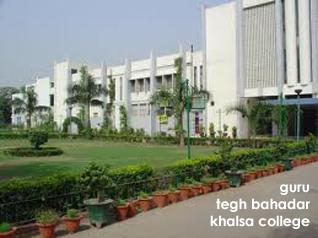
50-year-old Guru Tegh Bahadar Khalsa College, a constituent college of Delhi University, was declared a minority educational institution on July 19, 2011.
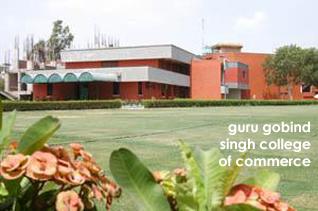
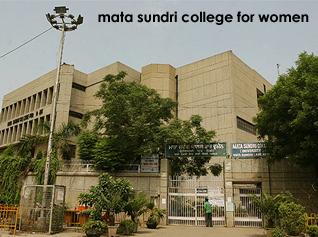
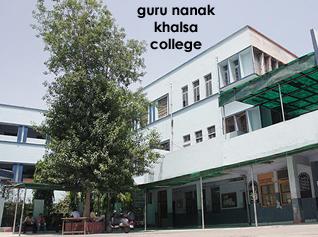
In addition, three other colleges of Delhi University, namely Guru Nanak Khalsa College, Devnagar; Guru Gobind Singh College of Commerce, Pitampura; and Mata Sundri College for Women, being administered by the Delhi Sikh Gurdwara Management Committee (DSGMC), were also recognised as minority institutions by the National Commission for Minority Educational Institutions.
These four are the only colleges to get the minority tag after St Stephen’s and Jesus and Mary colleges affiliated to Delhi University.
The development allows a series of constitutional protections to the above-mentioned four minority colleges, which are now covered under Article 30 (1) of the Constitution.
This Article gives religious and linguistic minorities the right to establish and administer educational institutions of their choice without having to implement the government’s quota policy applicable to central-educational institutions like Delhi University.
Now, the four colleges need not implement the mandatory government reservation, which other affiliates of Delhi University are supposed to do - be it 27 per cent OBC quota, 15 per cent SC quota or 7.5 per cent ST quota.
The only reservation minority colleges are expected to have is quota for the minority they were set up to cater to (Sikhs in this case) to the extent of 50 per cent.
Besides, the managements of minority colleges have the power to appoint the teaching staff and raise the fee structure as they want.
Ruling on the DSGMC’s 2008 petition, seeking minority status for the four colleges it runs, the full Bench of the commission today said there was sufficient evidence to prove that the three grounds needed for the grant of minority status - the institutions in question should have been established by the minority community in question (Sikhs here), should be administered by the minority (DSGMC here) and should work for the welfare of minorities.
Teachers of Guru Tegh Bahadar Khalsa College and the Registrar, Delhi University, however, consistently opposed the petition of the DSGMC. The main respondent, Prof. N.S. Kapur, who retired from Khalsa College after 38 years of service, said he would challenge the commission’s judgment in the high court.
July 20, 2011
Conversation about this article
1: Devinder Singh (India), July 20, 2011, 8:32 AM.
The power to appoint teaching staff can be misused. The propensity to appoint teachers from within the community disregarding merit is detrimental to the students studying therein, and therefore should be avoided at all costs. The community should be vigilant.
2: Manraj Kaur (Toronto, Ontario, Canada), July 20, 2011, 11:43 AM.
We have a rich history in education. The Guru Harkrishan Public Schools - Sikh institutions - are considered the best in New Delhi and elsewhere. This is a golden opportunity to do the same with these colleges and, with success through them, use them as a springboard to do much, much more. Remember, chardi kalaa! Instead of looking at what can go wrong, let`s make sure that nothing does go wrong, and that the right people in the right places do the right things! It is upto Sikhs in Delhi and India in particular to ensure that they reach their full potential and beyond.
3: Baldev Singh (Bradford, United Kingdom), July 20, 2011, 10:12 PM.
We need to become self-sufficient in everything, including education. The Computer and Search Engine are awesome developments in this age, and undreamt of just a few years ago ... so, we can all become geniuses by being 'self taught' and using any type of educational institution and showing all other groups our ideology of Truth and universality, rather than sectarianism and corruption.
4: S P Singh (Bhopal, Madhya Pradesh, India), August 17, 2015, 11:35 AM.
This is a welcome step.